

















Skip to content Skip to footer

About Shri Vishnu Spiritual Ashram

The Vishnu Ashram for Spirituality and Health is an independent, interfaith nonprofit organization dedicated to affirming the profound connection between spirituality and holistic well-being. Our mission is to foster healing, peace, and wholeness through programs that uplift individuals facing life’s most difficult and painful challenges. 

At Vishnu Ashram, we believe that true healing and wellness arise from honoring the richness of every individual’s identity and lived experience. Our ashram is grounded in the values of compassion, respect, and interconnectedness—principles that thrive in diversity. 

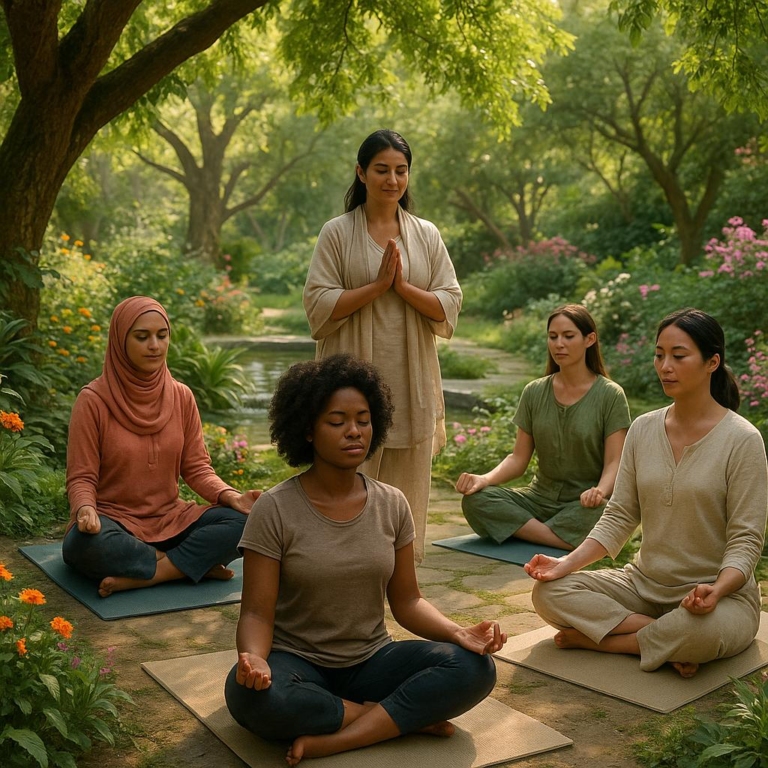
With a team that reflects varied backgrounds, across gender, culture, and ethnicity—we are committed to fostering an inclusive and equitable space where all feel welcomed, valued, and safe. We honor the traditions of holistic wellness while embracing the evolving needs of a diverse global community. Whether someone seeks peace, healing, or personal growth, Vishnu Ashram is a place where all people—regardless of race, gender, faith, or background—can find belonging and support on their path. 

Deities

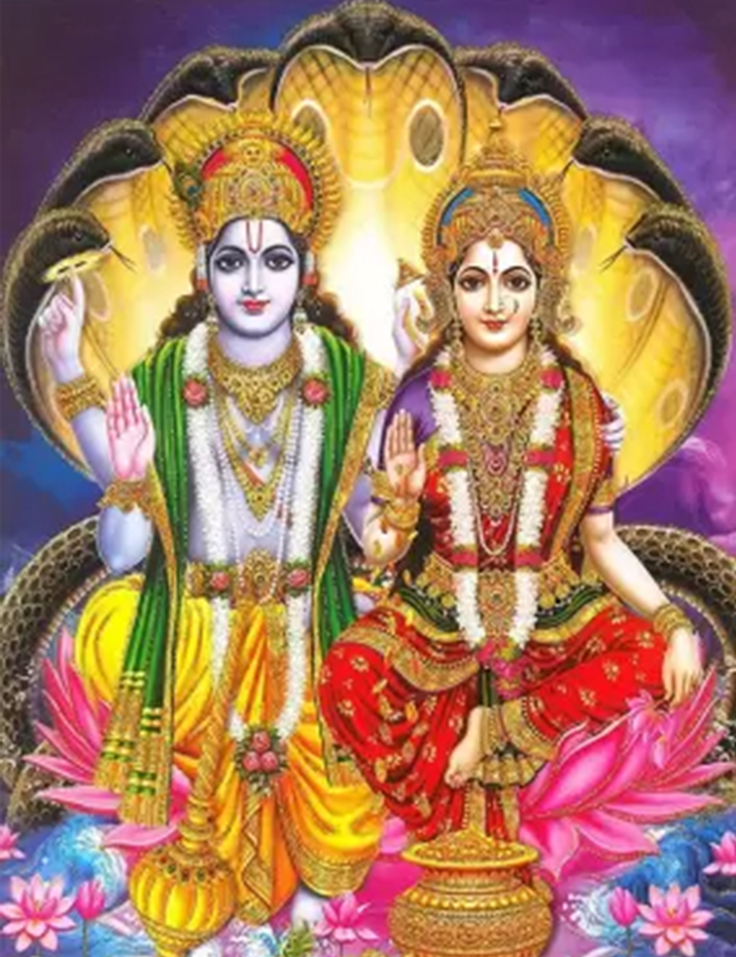
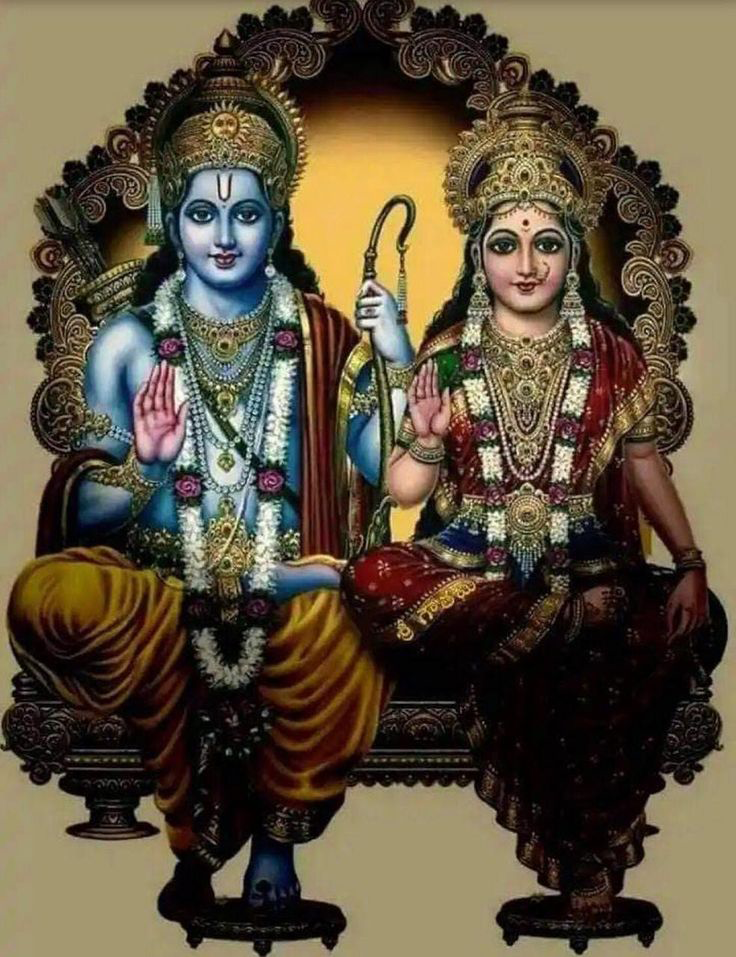
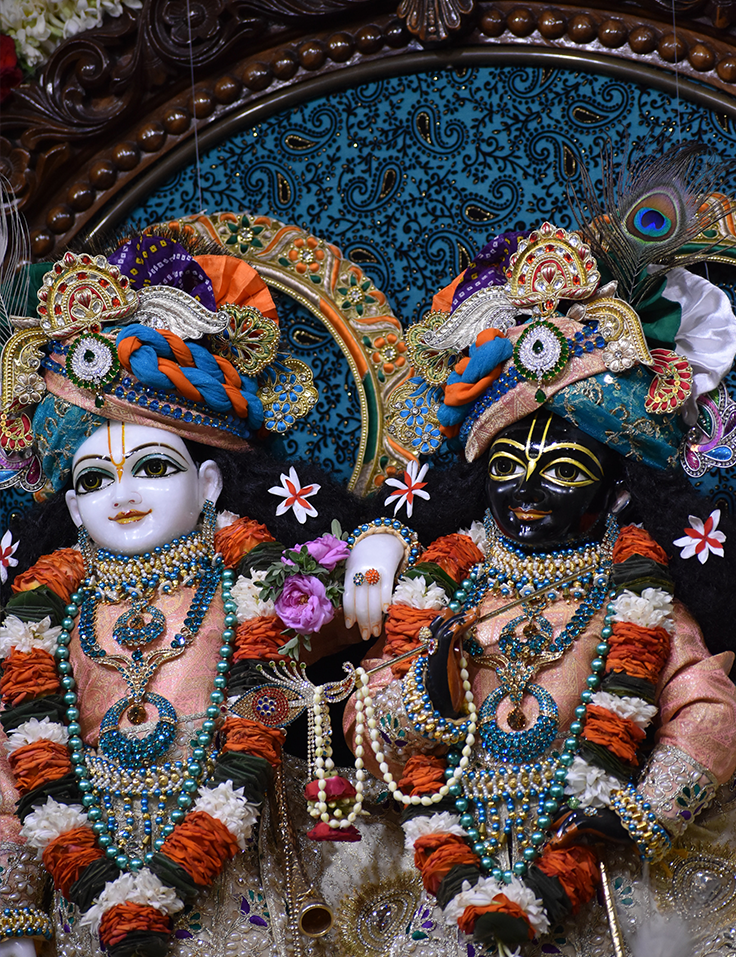
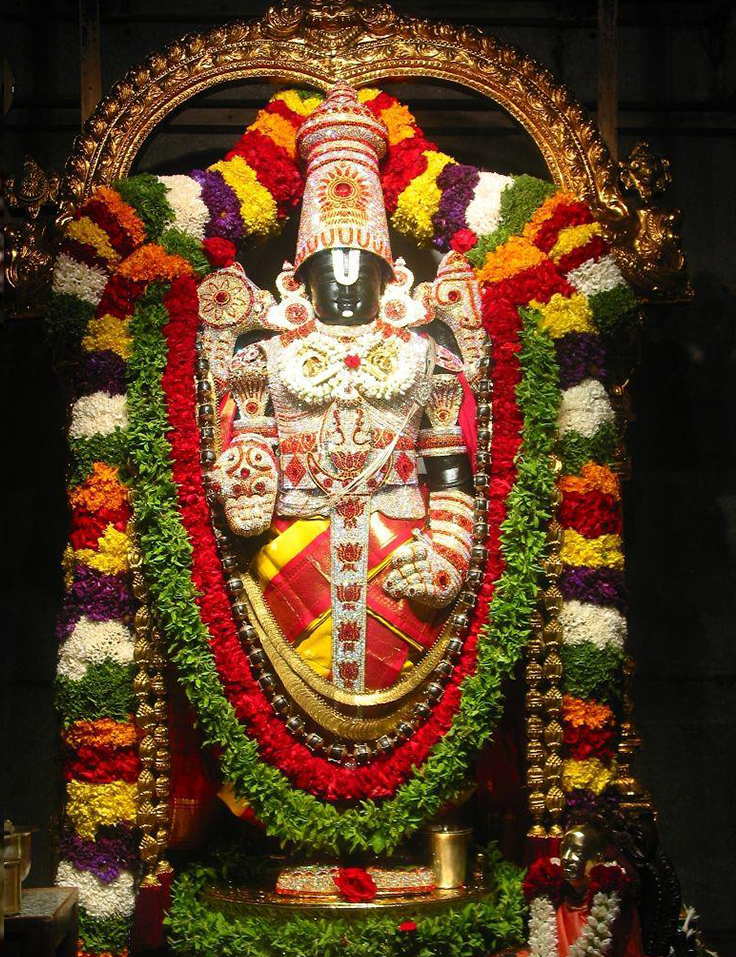
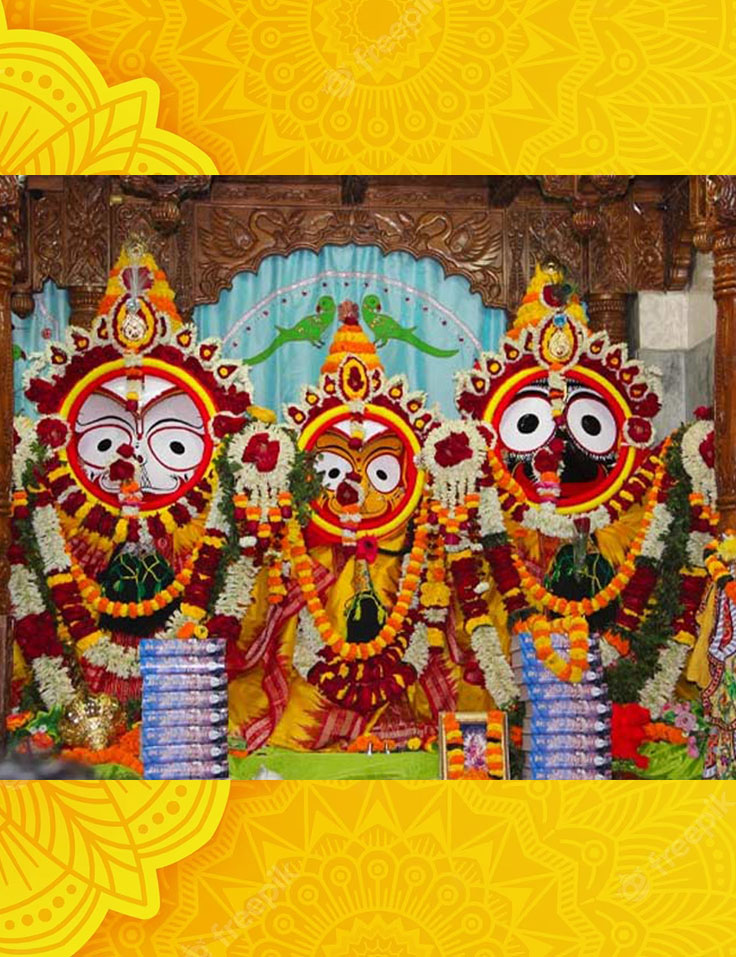
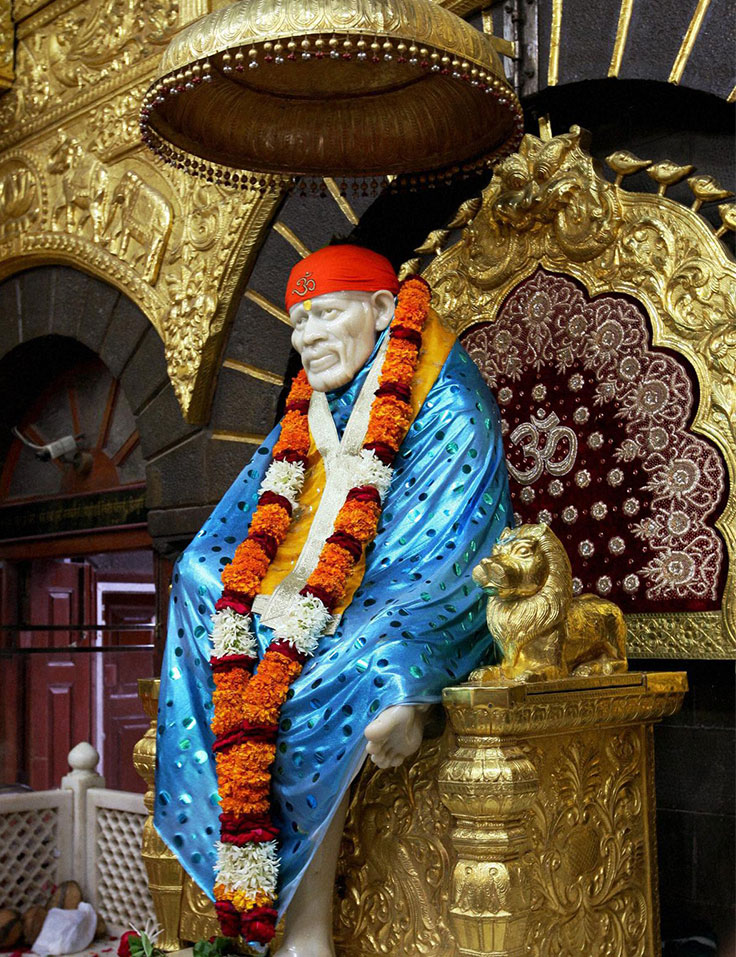
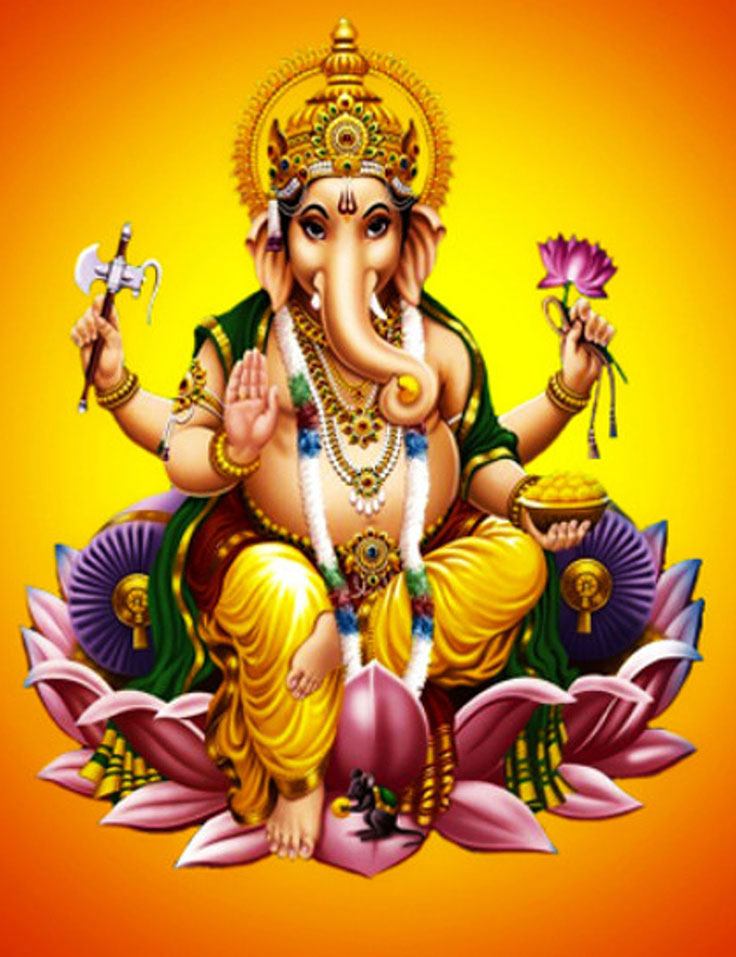
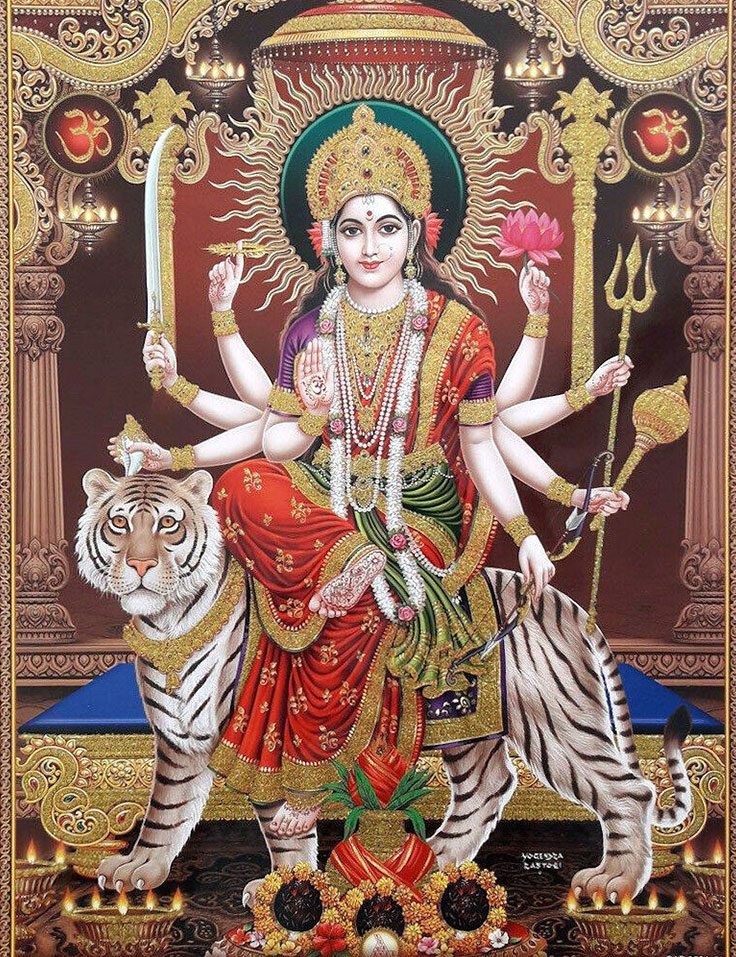
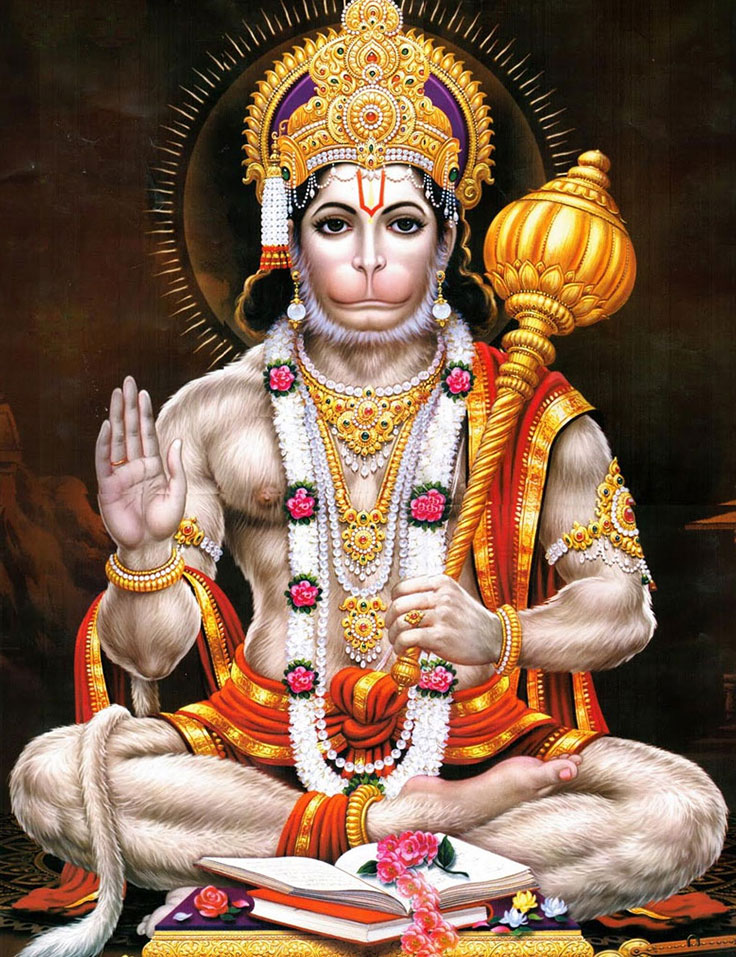
Our ashram will have a variety of deities to perform Puja, such as, Laxmi-Narayan, Sita-Ram, Radha-Krishna, Balaji Parivar, Jagannath Parivar, Saibaba, Ganesh ji, Amba Mata, Shivling, Hanuman ji, and Devi Saraswati. You can do all of your religious events and rituals right here at the ashram. You will feel amazing with the divine energy and will receive tons of blessings.
 

Wellness Services:

Spirituality and Health

We believe in the transformative power of yoga and meditation, energy healing, spiritual counseling, detoxification, and the integration of body, mind, and soul. These practices form the foundation of our healing approach, grounded in ancient wisdom and compassionate care. We practice holistic care by promoting organic nutrition and the timeless wisdom of Ayurvedic medicine. Our organization provides holistic mental health treatment for stress, sadness, anxiety, fear, insomnia, trauma, bipolar, PTSD, and other mental health challenges that includes spiritual care to support individuals on their healing journey. People who respect diverse beliefs and encourage exploring personal values, Vishnu Ashram is the organization for spiritual living with mental peace and transform. 

Furthermore, we provide spiritual healing services to individuals release from mental health institutions and correctional facilities, offering spiritual reflection, meditation and energy-based healing practices to support inner transformation. Our programs promote in inspirational counseling, guidance, emotional healing, self-awareness, forgiveness, and spiritual growth—nurturing a peaceful mind and renewed spirit among inmates and those we serve . Our Guru offers her highest blessings to those who are suffering, empowering them to heal and overcome the obstacles they face in life. 

Stress Management: A Path to Inner Peace

At our ashram, stress management is more than a quick fix—it’s a way of life. We support individuals in reconnecting with themselves through a holistic wellness approach that nurtures the body, mind, emotions, and spirit. 

Our Integrated Services Include:

  • Yoga & Movement Therapy: To release physical tension and cultivate inner calm. 
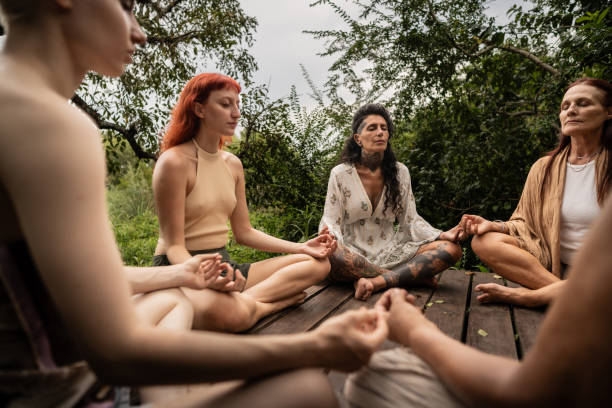
  • Meditation & Mindfulness: Guided sessions to quiet the mind and foster emotional clarity. 
  • Nutritional Guidance: Personalized dietary support to enhance energy and mental well-being. 
  • Mental Health Support: Counseling and group circles to process life challenges in a safe, compassionate environment. 
  • Workshops on Emotional Resilience & Self-Care: Practical tools to cope with daily stressors and cultivate self-awareness.

Why Holistic Stress Relief Matters?

We believe true healing requires addressing the root causes of stress, not just its symptoms. Whether someone is facing burnout, trauma, grief, or general overwhelm, our programs offer a nurturing space for renewal and long-term transformation. 


Spiritual Retreats

Our ashram offers a peaceful sanctuary for spiritual retreats, where individuals can step away from the noise of everyday life and reconnect with their inner selves. Each retreat includes yoga classes, guided meditation, prayer, reflective silence, an organic diet, and healing practices that nourish the soul, body, and spirit. Whether you’re seeking renewal, clarity, or a deeper spiritual connection, our retreats provide a sacred space for transformation. Guests leave feeling refreshed, grounded, and spiritually uplifted. 

Drug Addiction

Road To Recovery Through Spirituality:

Recovering from drug addiction through spirituality can be a powerful and transformative journey. While medical and psychological support are often essential, spirituality provides deeper meaning, inner strength, and long-term motivation for many people. Here’s a breakdown of how spirituality can aid in recovery, and how to integrate it into the healing process: 

  1. Understand What “Spiritual Recovery” Means

Spiritual recovery isn’t about subscribing to a specific religion — it’s about reconnecting with your inner self, a higher power (as you understand it), or a greater purpose in life. It includes: 

  • Developing inner peace
  • Letting go of guilt and shame
  • Building hope and meaning
  • Practicing forgiveness (of self and others)
  • Reconnecting to values like compassion, honesty, and humility
  1. Spiritual Practices to Support Recovery
  2. Core Spiritual Principles for Addiction Recovery
  3. Spiritual Communities & Healing Spaces
  4. Integrate Spirituality with Professional Support

“Addiction is a disease of isolation; recovery is a journey back to connection — with ourselves, with others, and with the divine.” 

Daily Spiritual Routine for Addiction Recovery 

This routine is structured but flexible. You can adapt it to your schedule, faith, or beliefs

Anger Management

Anger management is about recognizing, understanding, and controlling your anger before it harms you or others. It’s not about suppressing emotions but about expressing them in healthy, constructive ways. 

Here’s a clear, practical breakdown: 

  1. Recognize the signs early
  2. Pause before reacting
  3. Change the environment
  4. Reframe your thoughts
  5. Release tension in healthy ways
  6. Build long-term resilience

If anger is frequent, intense, or destructive, structured therapy like CBT (Cognitive Behavioral Therapy) or anger management classes can help you understand triggers and retrain your responses. 

At our ashram, we offer anger management therapy sessions several times a week. If you, your children, or loved one are experiencing challenges with anger, we welcome you to visit our peaceful facility, where our supportive team will help guide you toward a calm, balanced, and healthier emotional expression. 

Divine Soul Rami is an extraordinary person—an enlightened spiritual guru, the founder and chairperson of the Shri Vishnu Spiritual Ashram, a community leader, human rights activist, and social worker—who possesses wisdom, knowledge, passion, and unconditional love for humanity. 

Auspiciously, she was born with the gift of premonition (sixth sense). Guru Rami has predicted many global events, including the COVID-19 pandemic. She reached enlightenment ten years ago at the age of 39. 

Guru Rami is of Indian descent, originally from Kolkata, West Bengal. She is an American citizen and has been a resident of California for the past 35 years. She is also a commercial airline pilot, holds a Master of Business Administration (MBA) degree with a high GPA from Southern Utah University (SUU), and is currently pursuing a doctoral degree (Ph.D.) She has earned numerous degrees, diplomas, awards, and licenses across various fields. 

Guru ami has been actively involved in many women’s organizations and has volunteered with numerous nonprofit groups. Since childhood, she has had a burning desire to make a difference in the world. She is now establishing a nonprofit organization and an orphanage in Kolkata, India. A firm believer in equality and justice for all, Divine Soul Rami is one of those rare individuals who is humble, confident, and stands above the crowd. 

Spiritual Education:

It is a setting for the most important rituals, guidance, and teachings, provided by Guru Divine Soul Rami. Inspired by our deeply rooted beliefs and culture, the ashram is highly conducive to achieving stability, spirituality, calmness, and becoming a truly spiritual person. It is also a place to experience divine love and miracles. 

Individuals of any religious faith—through systematic control of body and mind, an organic lifestyle, proper diet, daily yoga, regular meditation, and guidance from a superior guru—can attain a higher state of spiritual advancement, super-consciousness, and enlightenment. This art and discipline of becoming spiritually awakened at a higher level is the primary objective of staying at the ashram. 

Foreign visitors are welcome from all over the world! Our facility is a heavenly ashram of God, where you can easily connect with divine energy and feel the vibrations of positivity. One of our most important goals is to cleanse the body and soul, thereby transitioning to a green lifestyle. Many of our resources come directly from nature. 


What is Spiritual Living?

Spiritual living is a way of life where a person seeks to connect with something deeper than just the material or physical aspects of existence. It’s about living with awareness, meaning, and alignment to inner values or a higher truth. While it can be shaped by religion, it doesn’t have to be—many people live spiritually without following a particular faith. 

Here are some key aspects of spiritual living: 

  1. Inner Awareness – Being mindful of thoughts, emotions, and actions, and striving to live consciously rather than on autopilot. 
  2. Connection – Feeling a sense of oneness with others, nature, or the universe; seeing life as interconnected. 
  3. Values & Ethics – Living with compassion, honesty, kindness, and respect for life. 
  4. Purpose & Meaning – Seeking deeper meaning beyond material success, often through service, creativity, love, or devotion.
  5. Practices – Engaging in activities that nurture the spirit, such as meditation, prayer, yoga, journaling, self-reflection, chanting, or time in nature.  
  6. Balance & Harmony – Aligning the physical, mental, emotional, and spiritual dimensions of life to live in peace and integrity. 
  7. Transcendence – Recognizing that there’s something beyond the ego (self-centered mind), whether one calls it God, the Divine, higher self, consciousness, or universal energy. 

Spiritual living means living with awareness, love, and alignment to your higher self, so that life feels meaningful, peaceful, and connected. 

Metaphysics

Metaphysics is the study of what’s beneath the physical—what’s eternal, unseen, and truly real. Metaphysics is a branch of philosophy that explores the fundamental nature of reality, existence, and the universe—beyond what we can observe with the five senses. 

Metaphysics asks the big, timeless questions, such as: 

  • What is real?
  • Who am I—beyond the body and mind?
  • What is the soul?
  • Is there a higher power or universal consciousness?
  • What happens after death?
  • What is the true nature of time, space, and being?

Quantum Physics

Quantum physics (also called quantum mechanics) is the branch of science that studies how the universe works at the smallest scales—like atoms, electrons, and photons (particles of light). Quantum physics reveals that the universe is far more mysterious, interconnected, and conscious than we ever imagined. It opens a doorway between science and spirituality. 

Quantum physics shows us that the tiny building blocks of reality behave in strange and mysterious ways that don’t follow the same rules as large objects like people, planets, or cars. 

Key Ideas in Quantum Physics: 

  1. Wave-Particle Duality
  2. Uncertainty Principle
  3. Superposition
  4. Entanglement
  5. Observer Effect

Who am I?

The question “Who am I?” is one of the most powerful and ancient questions in spiritual life. It’s not just a question about your name, job, or personality—it’s a doorway to deep self-realization. In the spiritual tradition (especially in Advaita Vedanta): 

You are not the body. You are not the mind. You are not your thoughts or emotions. 

You are pure awareness, the eternal witness, the silent presence that observes all experiences. 

When you ask “Who am I?” and go inward: 

You notice: 

  • Your body changes, but something in you remains the same
  • Your thoughts come and go, but you are the one watching them
  • Your emotions rise and fall, but you are not them—you feel them

This leads to the realization that your true Self (Atman) is: 

  • Eternal
  • Unchanging
  • Boundless
  • Full of peace and light

“I am not this body. I am not this mind. I am the divine presence, infinite and free.” 

— Inspired by Sri Ramana Maharshi 


What is soul?

The soul is the deepest, most essential part of who you are. It is the eternal, divine spark within you—the part that never dies, never ages, and is untouched by pain or fear. 

In Spiritual Understanding: The soul is often called: 

  • Ātman in Vedanta and Hindu philosophy
  • Spirit in many Western traditions
  • True Self or Inner Light in modern spirituality

Characteristics of the Soul: 

  • Eternal – it was never born and will never die
  • Divine – it is a reflection or spark of God (Brahman)

“The soul is the light within you. It cannot be burned by fire, drowned by water, or broken by sorrow. It is you—as you truly are.” 

Advanced level of meditation

The advanced level of meditation typically goes beyond basic techniques like breath awareness or guided visualization. It involves deep inner stillness, heightened self-awareness, and often, spiritual awakening or transformation. Here’s a breakdown of what defines advanced meditation: 
 

  1. Deep States of Absorption (Dhyana & Samadhi)
  • Dhyana: Continuous, effortless meditative absorption on a single object (like the Self, breath, mantra, or Divine presence).
  • Samadhi: A state of unity or total absorption—ego dissolves, and only pure awareness remains.
  • Savi Kalpa Samadhi: Still dualistic; the meditator is aware of the experience.
  • Nirvikalpa Samadhi: Non-dual; no sense of “I” or “object”—only infinite consciousness.
  1. Mastery Over Mind & Senses
  2. Non-Dual Awareness (Advaita/Oneness)
  3. Inner Transformation & Spiritual Realization
  4. 5. Spontaneous Meditation (Sahaja Avastha)

Caution 

Advanced stages can bring both ecstatic states and intense purification. Guidance from an experienced teacher or master is often essential. 

What is Telepathy?

Telepathy is the claimed ability to transmit thoughts, feelings, or information directly from one mind to another—without using any of the five physical senses (sight, hearing, touch, taste, or smell) or conventional communication methods (like speech or writing). 

Telepathy = Mind-to-mind communication 

Types of Telepathy (as commonly described) 

  1. Emotional Telepathy – Sharing or sensing another person’s feelings instantly.
  2. Mental/Thought Telepathy – Receiving words, thoughts, or images from someone else’s mind.
  3. Intuitive Telepathy – A deep knowing or gut feeling about someone’s state or intentions, often without any external clue.
  4. Spiritual Telepathy – Receiving intuitive or mental impressions from a higher consciousness, Divine presence, or enlightened beings.

Summary 

Aspect 

Description 

What is it? 

Non-physical, direct communication between minds 

How it works? 

Through mental intention, attention, and subtle awareness 

Can it be developed? 

Some believe yes—through meditation, empathy, and silence 

Scientific view 

Controversial; not widely accepted in mainstream science 

Spiritual view 

Common among mystics, yogis, and spiritual masters 

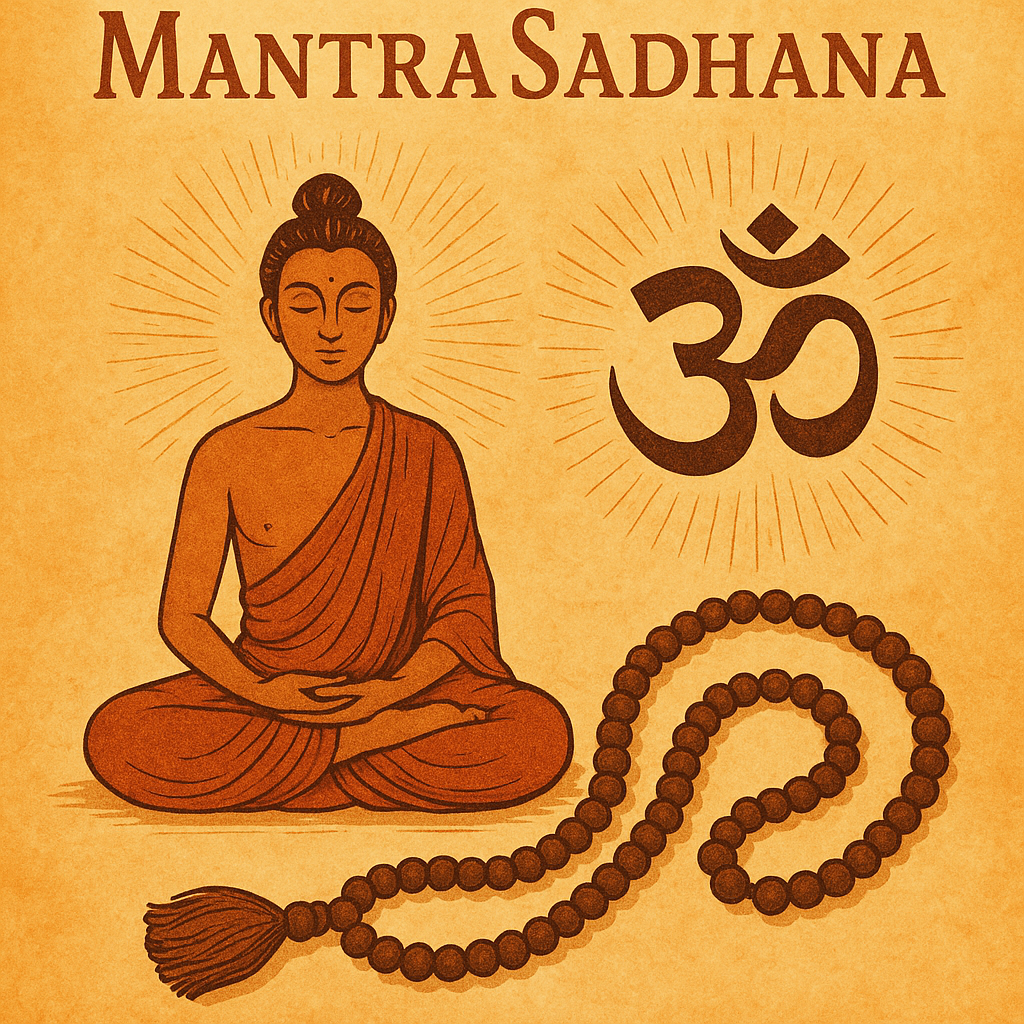
Mantra Sādhanā

Mantra Sādhanā is a dedicated spiritual practice where a sacred sound or phrase (mantra) is repeated with devotion, focus, and discipline to awaken inner transformation, purify the mind, and connect with the Divine.

 What is a Mantra? 

A mantra is a sacred syllable, word, or phrase—usually in Sanskrit—believed to carry spiritual power and vibrational energy. Examples: 

  • Om
  • So’ham (“I am That”)
  • Om Namah Shivaya
  • Hare Krishna Mahamantra

 What is Sādhanā? 

Sādhanā means “a disciplined spiritual practice” done regularly with commitment. It’s a path toward spiritual realization, purification, and self-mastery.

What Is Mantra Sādhanā? 

Mantra Sādhanā = Repeating (japa) a mantra with intention, devotion, and inner stillness to connect with divine consciousness. 

Caution 

Mantra Sādhanā is not mechanical chanting—it requires sincerity, discipline, and ideally the blessing or initiation (diksha) of a realized teacher if practicing powerful bija (seed) mantras or tantric mantras.

Awakening

Awakening is the process of becoming deeply aware of who we truly are—beyond our thoughts, roles, fears, and conditioning. It’s a spiritual realization that we are not just a body or personality, but something eternal, peaceful, and divine. 

What Does Awakening Mean? 

Awakening is like waking up from a dream: 

  • You realize that much of what you thought was “you”—your fears, beliefs, identity—was just a layer.
  • You become aware of a deeper presence within peaceful, timeless, and always whole.
  • You begin to live with more clarity, compassion, and purpose.

Why It Matters: 

When you awaken, you stop reacting—and start seeing. 

You stop surviving—and begin living. 

You stop seeking outside—and discover you are the light. 

What is Enlightenment?

Enlightenment is the state of realizing your true nature—beyond the ego, beyond suffering, beyond illusion. It is awakening to the truth that: You realize that you are not just a body or mind. You are a pure soul awareness—eternal, whole, and one with the Divine. In Spiritual Traditions (like Vedanta, Buddhism, and Yoga). Enlightenment signifies a profound understanding of reality existence, and oneself. Often achieved through deep insight of awakening. It can involve a sense of interconnection with everything, a dissolution of ego, and a transformation of ones’ perception of the world. 

Enlightenment is often called: 

  • Moksha – liberation from the cycle of birth and death (Samsara)
  • Nirvana – freedom from all attachments and suffering
  • Self-realization – knowing the Self (Atman) as one with Brahman (the Supreme)

“Enlightenment is not something you achieve. It is something you awaken to—because it has always been within you.” 

Accommodations

At Vishnu Spiritual Ashram, there are six deluxe bedrooms for adults. Each deluxe room includes air conditioning, a large window, a queen-size bed, a nightstand, a dresser, a desk, chairs, a TV, a spacious closet, and an attached bathroom. 

There is a large family room for disciples with a 65″ big-screen TV, where they can relax, enjoy music, or gather for prayer meetings and bhajan singing. The ashram also features a spacious dining hall and kitchen on the first floor. We provide three organic meals and two snacks per day, along with 24-hour Wi-Fi access and laundry facilities. 

Additionally, there is a large hall dedicated to yoga, meditation, and healing practices. For those interested in volunteer service, there are many opportunities to contribute and support the Sacred Ashram. 

The ashram is in a convenient area in Riverside, California. The bus stop is just a block away, and all major shopping malls are within a mile. It is a peaceful, safe, and upscale neighborhood where you can enjoy fresh air during a morning or evening walk without worry. If you have any questions, please feel free to give us a call—we’d be happy to help you begin your spiritual journey today.